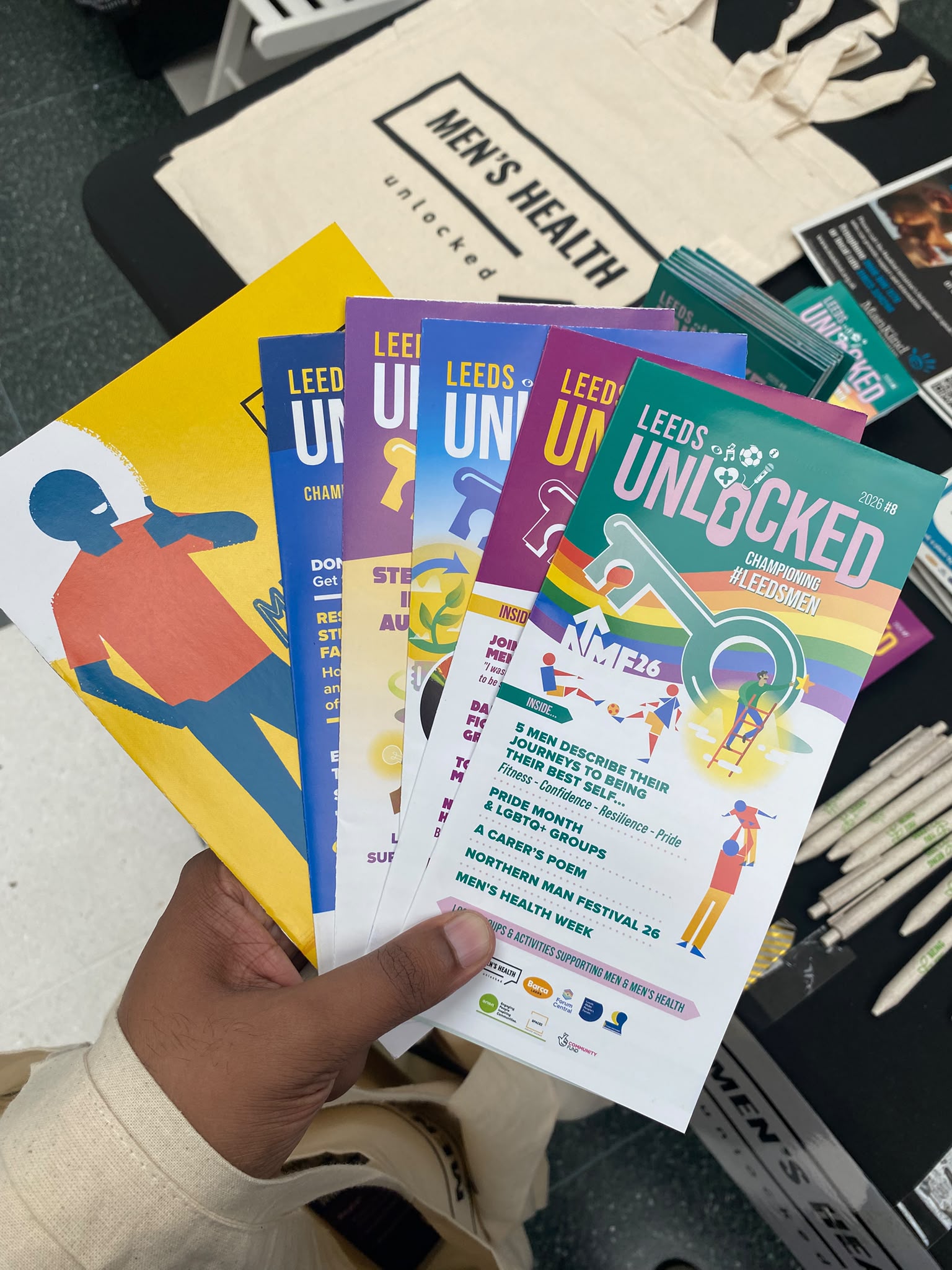

Touchstone is a proud partner of the Men’s Health Unlocked service, led by Forum Central and delivered in partnership with Space 2, Barca Leeds, and Feel Good Factor. This June, as every year, Men’s Health Unlocked (MHU) held the Northern Man Festival (NMF), a series of events aimed at supporting men’s overall wellbeing. Touchstone’s MHU Link Worker, Maz, reflects below on why events like these are so important in our communities.
What is the Northern Man Festival?
Led by Space 2, and delivered by all other partners including Touchstone, the Northern Man Festival (NMF) is a celebratory series of events open to the public, spanning across Men’s Health Week (15th-21st June) and finishing on Father’s Day, which was marked this year with Leeds Dads’ Dadtastic Day. This year’s festival theme was ‘What Shapes a Man?’ and we held a range of events, including our Manthology poetry event, football matches, and various market stalls, designed to explore the different aspects that shape the men in our communities.
Sharing Information around Men’s Health and Making Support More Accessible
Our experiences of, and attitudes to, health are a key shaper of our lives and encouraging men to talk about this was a key focus of the Northern Man Festival. Holding NMF during Men’s Health Week is a brilliant invitation for men to be involved in a conversation about their own health, both mental and physical, and the health of other men they know.
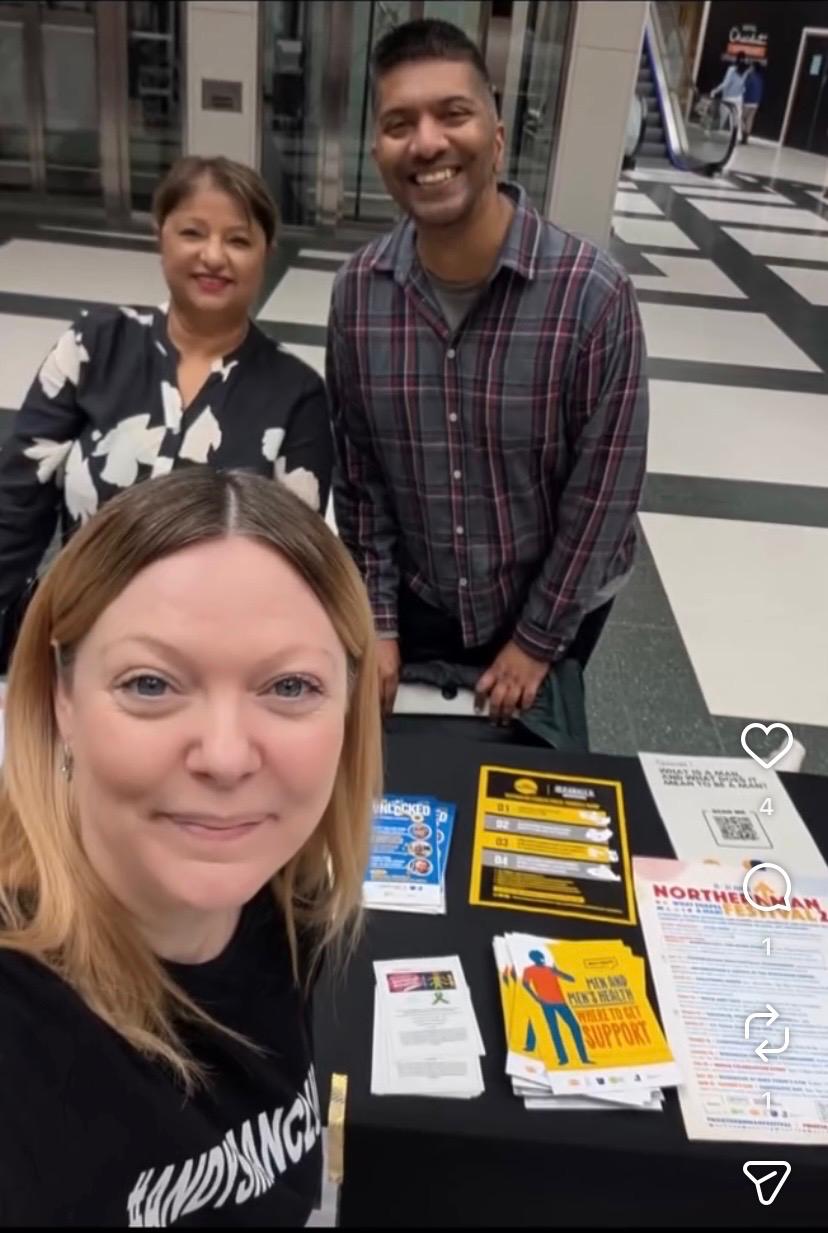
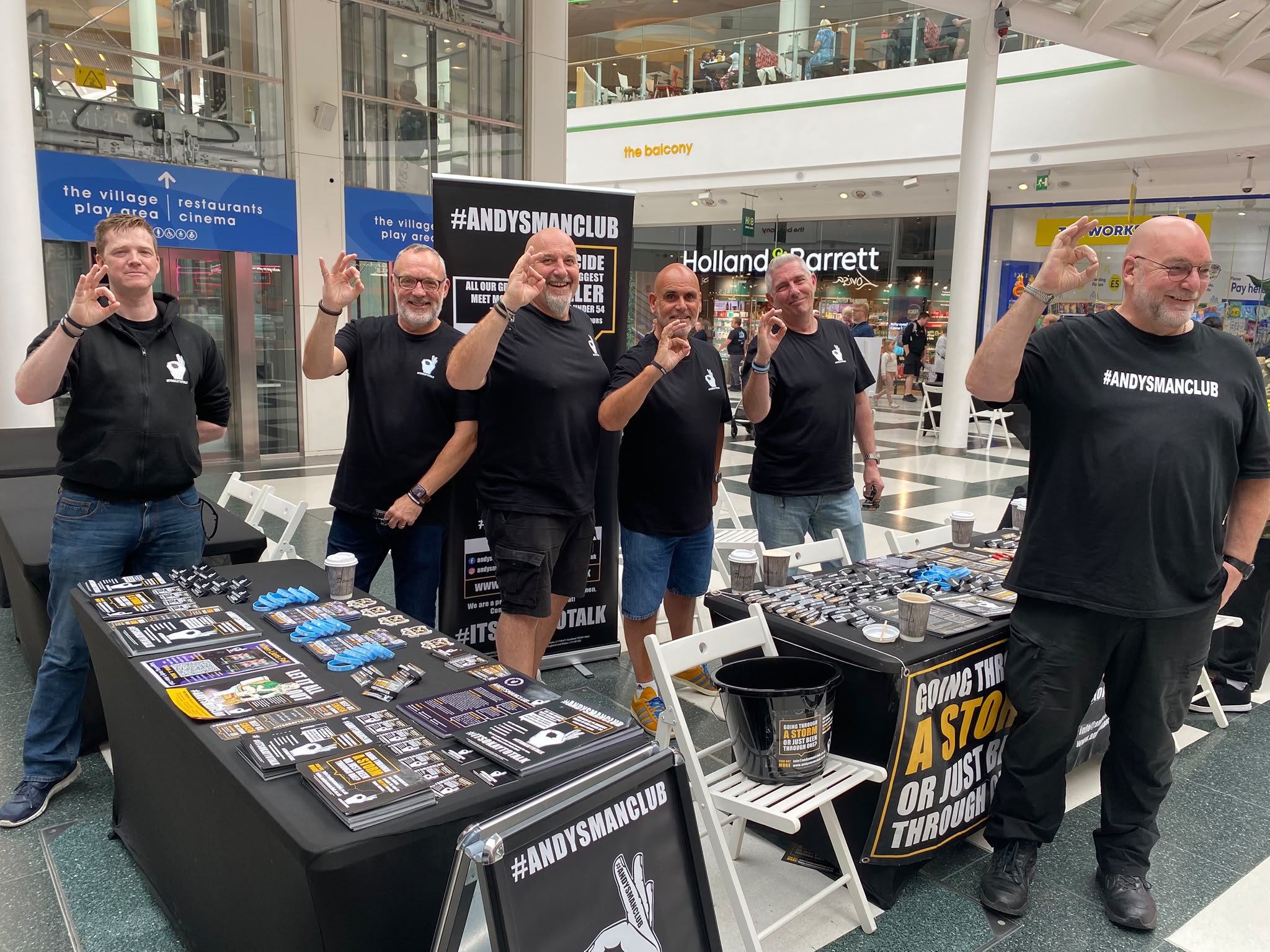
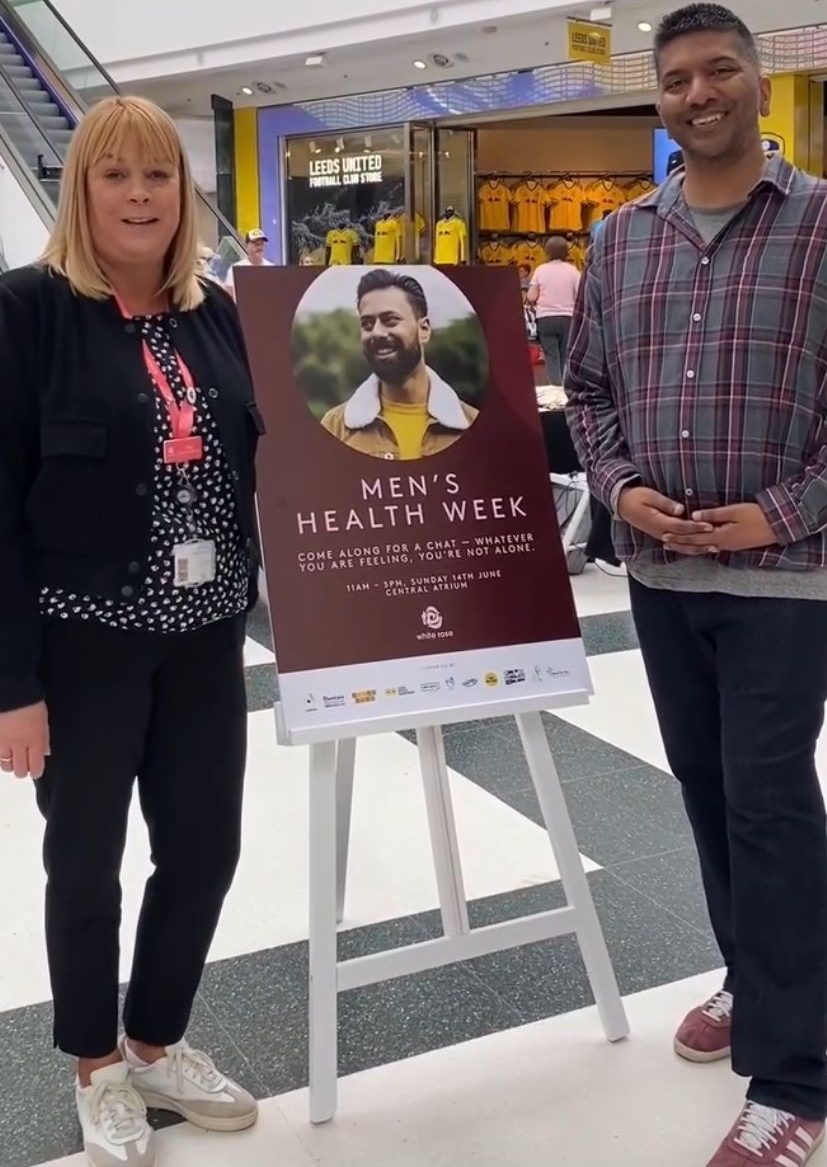
Globally, the suicide rate for men is higher and many health issues disproportionately effect men. To open conversations about issues like this and offer information and support, we held a series of stalls at the White Rose Centre, featuring male-specific services like Men’s Health Unlocked, Andy’s Man Club, and Leeds Dads. We also hosted stalls from organisations like GamCare and Leeds Health Awareness, who took referrals for support, checked blood pressure, and shared information on Breast and Prostate Cancer.
Being visible like this in non-clinical spaces is important, as it encourages the public to come over and chat. It makes support and healthcare more accessible and less scary. We had conversations about mental health, heard people’s concerns for their loved ones, and listened to stories of men overcoming obstacles and being in a better place. We also signposted and provided info on support services, all whilst folk were going about their Sunday shopping.
Feeling Less Alone Through Sharing Experiences
Sharing our concerns, struggles, and experiences around health can also be validating and freeing, lifting weights of pressure or shame that can lead to avoidance and introversion. When I learned of some of the social reasons as to why men don’t look after their health as steadily as other genders, it weirdly gave me some relief for the unhealthy habits I had formed.
Biologically, men may not develop issues which require GP support as they grow up and because of this they can miss the opportunity to build rapport with their GP and raise health concerns. Men can also feel they struggle to get to the GP due to their working commitments. Male-related domestic abuse can be difficult to identify even for the victim-survivor themselves and LGBTQIA+ victim-survivors have even more vulnerabilities to manage, which can make their experiences very difficult to talk about or seek support.
By creating spaces where men can share their experiences and understand the reasons they might struggle to access the right support for their wellbeing, we can better understand each other, break down barriers to support, and ultimately feel less alone.
Helping Men to Feel Valued in their Communities
Events like these not only bring men together over shared experiences and activities but also raise awareness of how valued men are to community spaces. NMF invites men and people of all genders to join together in public spaces to show men that they have a valued space in our communities. Sharing their experiences through events like our Manthology poetry showcase highlights to men that their experiences are meaningful and often shared – and that people are interested in listening to what’s going on for them.
This gendered lens is not to compare or discount the experiences of people of other genders – instead, it is an attempt to support men to live healthier and more positive lives, by addressing unhelpful societal and cultural norms placed on them. Working like this will help men build wider social connections and help people of all genders, to feel more connected to the men in their lives, to their sons, fathers, cousins, uncles, nephews, friends, grandfathers, and colleagues.
Challenging Social Norms and Stigma
Events like this also chip away at the archaic stigma which still lingers. I feel we are in a changing landscape of what it means to be a man now, with older ideals slowly shedding – but we still have negative narratives embedded in some of us.
To challenge this stigma all year round, Touchstone, with colleagues from MHU, set up the Being Men Podcast. The Being Men podcast models what a men’s peer support group can look like. It shows men chatting in a safe space, learning from each other, sharing difficult emotions, being open and there for each other in the moment.
At the Northern Man Festival, we had loved ones say their relative wouldn’t go to a group but may listen to something. And in a world saturated with podcasts, this one actually opens a door for the listener to be a fly on the wall, hear men delve into their emotions, and maybe inspire others to do the same.
The Impact of NMF and MHU work
The biggest feedback I receive at info stalls is ‘it’s so good that a service like yours exists’ and ‘it’s really needed’. If we can show different avenues of support which help men avoid more dangerous and unhealthy coping mechanisms – that’s our job done. It’s hard to quantify and put numbers to something like that but men deciding to attend a group, listen to a podcast, reach out to their friends – these all can be steps to a healthier, happier, longer life.
Acknowledging the privileges men have in the world and throughout history is important but does not take away from the struggles a lot of other men face. The issues that disproportionately affect men can be changed – they are not unchangeable. With awareness raising, invitations shaped for men, and people seeing different versions of what a healthy man can look like, we can hope for a future where men’s health is unlocked.